Overactive Bladder and the Autonomic Loop
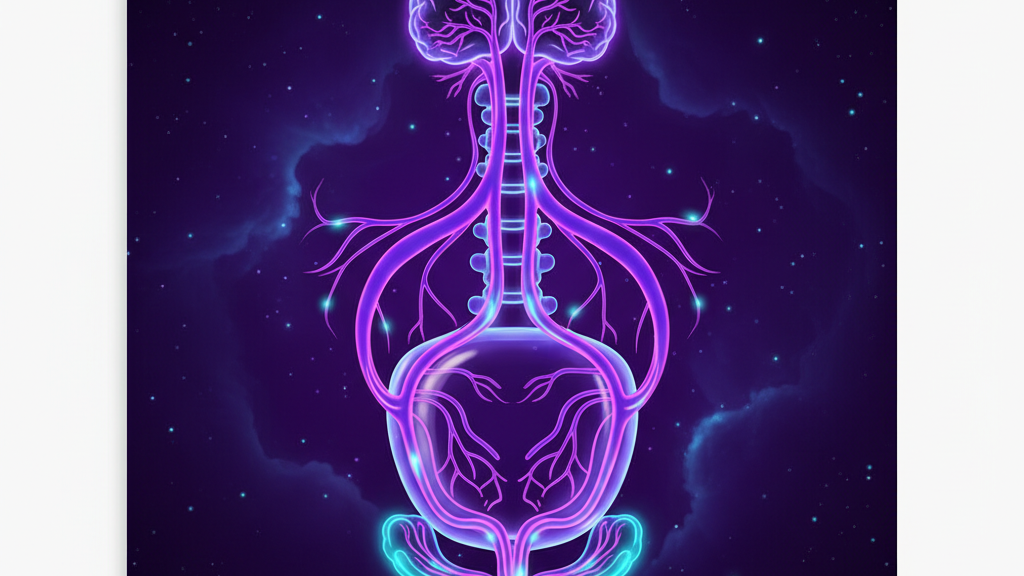
The standard story of overactive bladder centers on the detrusor muscle and muscarinic receptor blockade. That story works for some patients. For the rest — the ones who fail anticholinergics, fail Botox, and end up frustrated — the bladder is the messenger, not the problem.
The Autonomic Story
Bladder filling and emptying are coordinated by a complex interplay between sympathetic, parasympathetic, and somatic pathways, integrated through the pontine micturition center and modulated by cortical input. When sympathetic tone runs high — chronic stress, anxiety, post-traumatic states — the cortical inhibition of urgency weakens and the threshold for urgency drops. Patients describe the bladder as having "a mind of its own." It does. It is the mind of an overactivated nervous system.
The Pelvic Floor Layer
Sustained pelvic floor hypertonicity is common and frequently missed. A tight pelvic floor pulls the bladder neck downward, alters bladder positioning, and contributes to urgency, frequency, and incomplete emptying. Pelvic floor dysfunction is not just relaxation that fails to occur during voiding — it is also a sustained baseline contraction that should not be there.
The Workup
- Standard rule-outs: UA, postvoid residual, voiding diary
- Pelvic floor examination by a trained PT or specialist
- HRV measurement (almost always reduced)
- Sleep history (nocturia is multifactorial)
- Stool history (constipation is often comorbid)
The Intervention Stack
Pelvic Floor Physical Therapy
Down-training a hypertonic pelvic floor is foundational. This is not Kegels. It is the opposite of Kegels.
Behavioral Bladder Retraining
Scheduled voiding, urge suppression techniques, fluid management. Boring but effective.
Autonomic Recalibration
Slow breathing protocols, vagal tone work, addressing the broader sympathetic load.
Bioelectronic Approaches
Sacral neuromodulation has the strongest evidence base in refractory overactive bladder. Percutaneous tibial nerve stimulation is a less invasive option with reasonable data. Both work through modulation of the autonomic and somatic pathways governing the lower urinary tract.
The Ultrasound Frontier
Focused ultrasound applied to sacral nerve roots is being investigated as a non-invasive alternative to implanted neuromodulation. Early data is promising but the modality is not yet standard of care.
The reframe: The bladder is one of the loudest reporters in the body. When it is shouting, the question is not just what is wrong with it — but what is the rest of the nervous system doing that is making it shout.
References
- Fowler CJ, Griffiths D, de Groat WC. "The neural control of micturition." Nature Reviews Neuroscience, 2008;9(6):453-466.
- Siegel S et al. "Three-year follow-up results of a prospective, multicenter study of sacral neuromodulation." Urology, 2016;94:57-63.
- Faubion SS et al. "Recognition and Management of Nonrelaxing Pelvic Floor Dysfunction." Mayo Clinic Proceedings, 2012;87(2):187-193.