Internal Trembling: Decoding the Body's Hidden Vibration
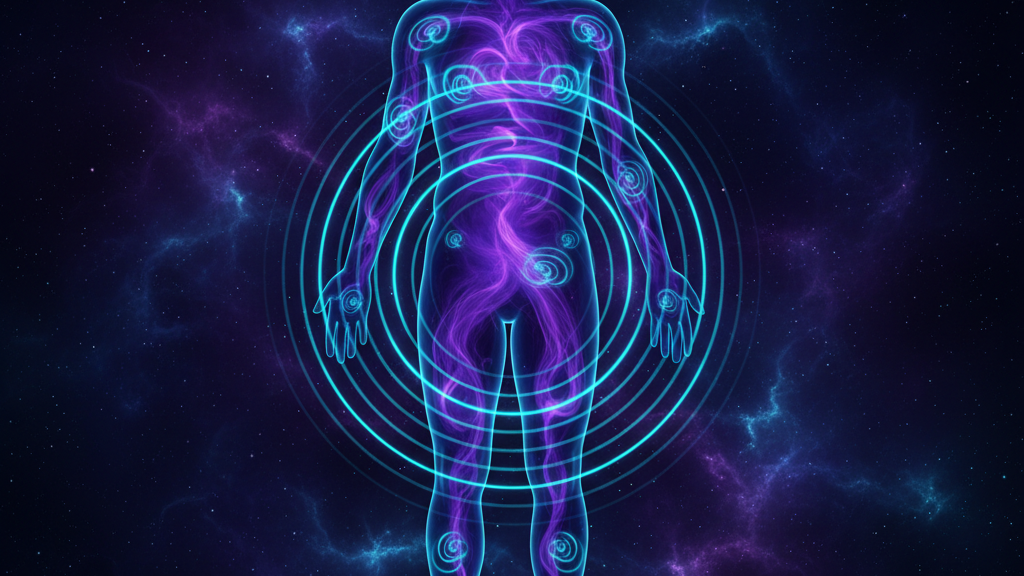
Internal trembling is one of the most under-recognized symptoms in clinical medicine. It is invisible to the observer, often missed on examination, and patients quickly learn to stop bringing it up because they have been dismissed. But the symptom is real, it is autonomic in origin, and it is treatable.
What Internal Trembling Actually Is
Functionally, internal trembling appears to reflect dysregulated autonomic output to skeletal muscle and smooth muscle, often combined with heightened interoceptive awareness. The patient is detecting subclinical sympathetic discharge that, in a healthier system, would not reach conscious perception. In some patients, low-grade fasciculations or muscle motor unit instability may also contribute.
The Common Drivers
- Sustained sympathetic activation — chronic stress, post-viral states, long-COVID
- Mitochondrial dysfunction in skeletal muscle, producing low-amplitude motor unit instability
- Electrolyte and micronutrient depletion — magnesium and potassium most commonly
- Thyroid dysfunction — both hyper and subclinical hyperthyroidism
- Blood sugar instability — adrenergic surges following hypoglycemia
- Caffeine sensitivity, especially in slow CYP1A2 metabolizers
The Workup I Run
Comprehensive metabolic panel, magnesium (RBC if available), TSH and free T3/T4, fasting glucose and HbA1c, vitamin B12 and folate, and an inflammatory marker. I also assess HRV — internal trembling almost always presents with low parasympathetic tone.
The Intervention Stack
Once reversible drivers are addressed, the symptomatic intervention is autonomic recalibration:
- Slow breathing protocols, particularly extended exhalation patterns (4-second inhale, 8-second exhale)
- Magnesium glycinate, 200–400 mg in the evening
- Vagal stimulation — non-invasive auricular or cervical methods, including emerging ultrasound-based devices
- Polyvagal-informed somatic work — body-based therapies that retrain the autonomic nervous system to tolerate stillness
- Sleep architecture support — addressing the deep-sleep deficit common in this population
The Microtubule Aside
Cytoskeletal stability — including microtubule integrity in muscle and nerve cells — is essential for the precise temporal control of motor signaling. Conditions that disrupt this stability can manifest as low-grade motor noise. This is mechanistically suggestive but not yet a diagnostic target.
Patient counseling point: Internal trembling is not "in your head." It is in your autonomic nervous system. The symptom is real, the workup is straightforward, and recovery is possible.
References
- Goldstein DS. "Dysautonomias: clinical disorders of the autonomic nervous system." Annals of Internal Medicine, 2002;137(9):753-763.
- Shaffer F, Ginsberg JP. "An Overview of Heart Rate Variability Metrics and Norms." Frontiers in Public Health, 2017;5:258.
- Porges SW. "The polyvagal theory: phylogenetic substrates of a social nervous system." International Journal of Psychophysiology, 2001;42(2):123-146.