Neck and Jaw Tension: Where Mechanotransduction Meets the Mind
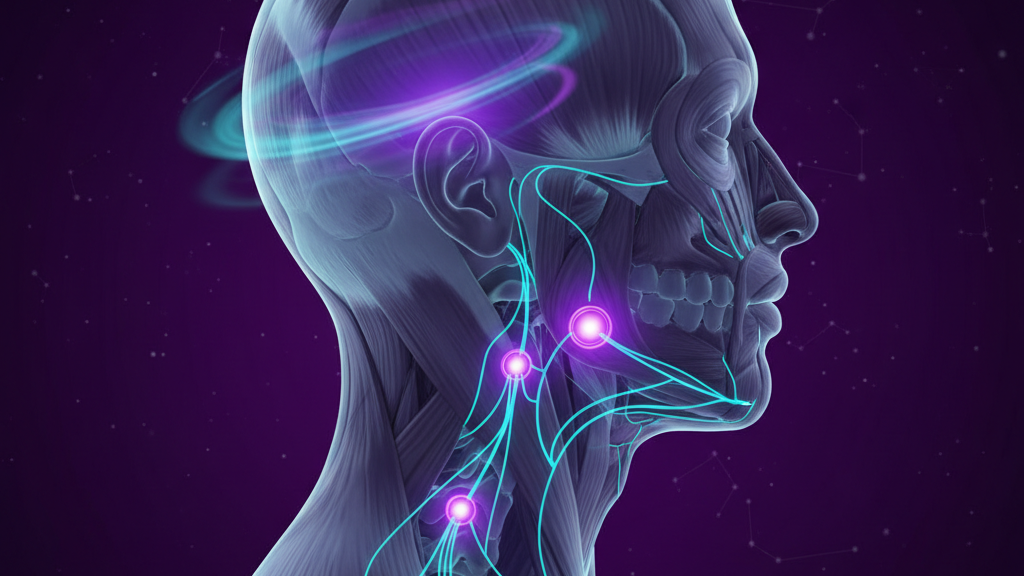
Almost every patient I see with chronic anxiety, migraine, or autonomic dysfunction has neck and jaw tension. This is not coincidence. The musculature of the upper body is wired into the autonomic nervous system in ways that are clinically actionable.
Why the Neck and Jaw, Specifically
The cervical spine houses the vagus nerve, the sympathetic chain, and the upper cervical nerve roots that share dermatomes with the head. The trigeminal complex extends into the upper cervical cord. The masseter and temporalis are among the most-used muscles in the body — chewing, clenching during sleep, holding emotional tension. Sustained contraction here has outsized effects on autonomic state.
The Mechanotransduction Layer
Cells sense and respond to mechanical force. The fascia is densely innervated with mechanoreceptors. Sustained tension in the fascial network alters local interstitial fluid dynamics, modifies sensory neuron firing patterns, and changes the input to the central nervous system. This is mechanotransduction operating at the tissue level — and it is bidirectional. The state of the tissue shapes the state of the nervous system.
The Common Drivers
- Sustained sympathetic activation (chronic stress, post-traumatic states)
- Forward head posture (dramatically multiplies cervical loading)
- Sleep bruxism (often a marker of disordered sleep)
- Mouth breathing (alters resting tongue and mandibular position)
- Visual strain from near work
- Underlying TMJ dysfunction
The Workup
Detailed musculoskeletal examination including atlanto-occipital and TMJ assessment. Postural evaluation. Sleep history including bed partner observations. Consideration of imaging only if red flags. HRV measurement — almost always reduced in chronic upper body tension.
The Intervention Stack
Manual Therapy
Myofascial release, suboccipital decompression, and craniosacral approaches all produce measurable autonomic shifts. Skilled bodywork is not a luxury in this population.
Therapeutic Ultrasound
Therapeutic ultrasound applied to deep musculature — including the masseter, suboccipitals, and upper trapezius — works through mechanotransduction at the cellular level, increases tissue temperature, and enhances local circulation. The effects on chronic tension are often immediate.
Breathwork
Slow nasal breathing reduces accessory respiratory muscle recruitment and biases the autonomic state away from sympathetic dominance. The neck muscles relax as a consequence.
Postural and Movement Retraining
Chin tucks, scapular setting, deep neck flexor activation. Daily, brief, sustained over months.
Sleep Architecture
If bruxism is present, address upstream sleep quality before escalating to splints alone. Consider sleep-disordered breathing.
Clinical pearl: Chronic neck and jaw tension is not a postural defect. It is a tissue-level expression of a sustained autonomic state, and it responds to interventions that work at both layers.
References
- Schleip R, Klingler W. "Active contractile properties of fascia." Clinical Anatomy, 2019;32(7):891-895.
- Falla D et al. "Effect of neck exercise on sitting posture in patients with chronic neck pain." Physical Therapy, 2007;87(4):408-417.
- Nijs J et al. "Treatment of central sensitization in patients with chronic pain." Expert Opinion on Pharmacotherapy, 2014;15(12):1671-1683.