Hashimoto's Through a Cellular Lens: Autoimmunity, Energy, and the Thyroid
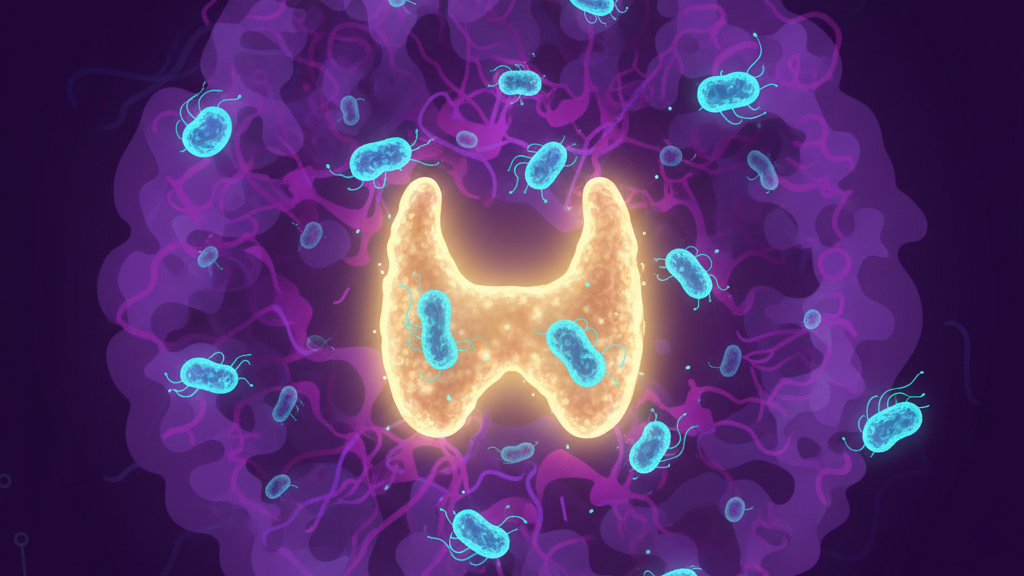
A patient with Hashimoto's whose TSH is "normal" on levothyroxine is often still symptomatic. Fatigue, brain fog, cold intolerance, weight regulation issues, hair changes — these persist because the lab number is not the whole story. The cellular environment in which thyroid hormone has to function is the rest of the story.
What Hashimoto's Actually Is
Hashimoto's thyroiditis is a T-cell mediated autoimmune destruction of thyroid tissue, marked by anti-TPO and anti-thyroglobulin antibodies. The disease begins years before TSH rises. By the time levothyroxine is initiated, there is usually substantial gland damage and ongoing immune activation.
The Cellular Hormone Story
Thyroid hormone has to be converted from T4 to the active T3 form, primarily in peripheral tissues, by deiodinase enzymes. This conversion is selenium-dependent and is impaired by inflammation, cortisol elevation, and oxidative stress — all of which are common in Hashimoto's patients. T3 then has to enter cells, bind nuclear receptors, and orchestrate transcription. Each of these steps can fail at the cellular level even when serum TSH looks fine.
The Workup I Run
- TSH, free T4, free T3, reverse T3
- Anti-TPO and anti-thyroglobulin antibodies
- Vitamin D, B12, ferritin, zinc, selenium
- hs-CRP and homocysteine
- Fasting glucose and HbA1c
- Cortisol panel (diurnal salivary or DUTCH)
The Intervention Layers
Layer 1: Hormone Replacement Done Well
For many patients, levothyroxine alone is inadequate. Combination T4/T3 therapy, or natural desiccated thyroid, may be more appropriate. The goal is symptom resolution, not just TSH normalization.
Layer 2: Cool the Autoimmune Process
Identify and address triggers. Gluten elimination has reasonable evidence in the Hashimoto's population specifically. Vitamin D repletion to mid-normal range. Selenium supplementation (200 mcg daily) reduces antibody titers in many studies.
Layer 3: Support Cellular Conversion and Receptor Function
Selenium and zinc for deiodinase function. Iron repletion if low — peripheral T3 generation is iron-dependent. Address any underlying cortisol dysregulation, which directly suppresses T4-to-T3 conversion.
Layer 4: Reduce the Inflammatory Load
Sleep, stress regulation, anti-inflammatory diet, gut health. Vagal tone improvement, including non-invasive stimulation approaches.
The New-Medicine Note
Photobiomodulation applied to the thyroid has small but interesting trial data showing reduced antibody titers and reduced levothyroxine dosing requirements over time. The mechanism is presumed to be mitochondrial support in the residual thyroid tissue and modulation of local inflammation.
The reframe: Hashimoto's is not a hormone deficiency that happens to be autoimmune. It is an autoimmune disease that produces a hormone deficiency, and the cellular environment in which that hormone has to work matters as much as the dose.
References
- Caturegli P et al. "Hashimoto thyroiditis: clinical and diagnostic criteria." Autoimmunity Reviews, 2014;13(4-5):391-397.
- Toulis KA et al. "Selenium supplementation in the treatment of Hashimoto's thyroiditis." Thyroid, 2010;20(10):1163-1173.
- Höfling DB et al. "Low-level laser in the treatment of patients with hypothyroidism induced by chronic autoimmune thyroiditis." Lasers in Medical Science, 2013;28(3):743-753.