IBS and the Gut–Mitochondria Axis
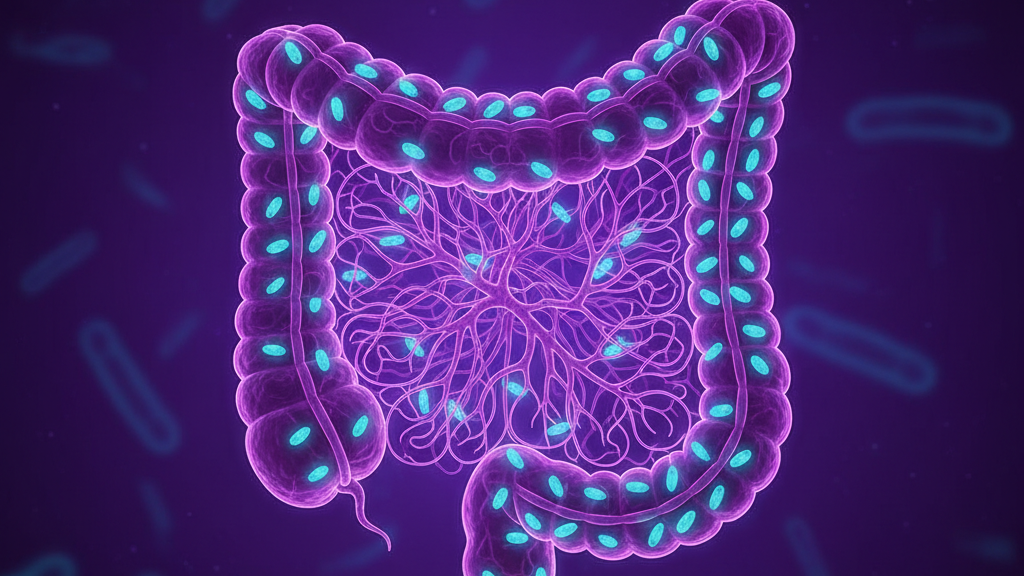
Irritable bowel syndrome is the most common diagnosis in gastroenterology and one of the least satisfying to treat. The problem is that we have been treating it as a motility disorder when, mechanistically, it sits at the intersection of the autonomic nervous system, the enteric nervous system, the gut microbiome, and — increasingly understood — gut wall mitochondrial function.
What the Gut Mitochondria Are Doing
The intestinal epithelium turns over every three to five days. That regeneration is metabolically expensive. The smooth muscle and enteric neurons that coordinate motility are similarly demanding. When mitochondrial function in these tissues is impaired — by oxidative stress, by chronic inflammation, by post-infectious states — motility, secretion, and barrier integrity all suffer simultaneously.
The Brain–Gut Loop
The vagus nerve carries roughly 80% afferent traffic. The brain learns about gut state continuously. When gut energetics are compromised, the afferent signal becomes noisy, and central pain processing amplifies the noise. This is one reason IBS patients show altered visceral pain thresholds even on normal motility studies.
The Workup
- Standard rule-outs: celiac serology, fecal calprotectin, basic CBC and chemistry
- SIBO breath testing in suspicious presentations
- Stool comprehensive analysis if dysbiosis is suspected
- Food sensitivity assessment, with skepticism about IgG panels
- HRV assessment — almost always reduced in IBS
The Intervention Layers
Layer 1: Reduce Gut Inflammation
Identify and remove specific triggers. Low-FODMAP elimination as a diagnostic, not a long-term diet. Address SIBO if present. Restore butyrate-producing bacteria with appropriate fiber strategies.
Layer 2: Support Gut Cellular Energy
Butyrate itself is the primary fuel for colonocytes. L-glutamine supports enterocyte regeneration. Mitochondrial cofactors — CoQ10, B-complex, magnesium — support the broader cellular machinery.
Layer 3: Recalibrate the Brain–Gut Axis
Slow diaphragmatic breathing has direct effects on gut motility through vagal pathways. Gut-directed hypnotherapy has the strongest evidence base of any psychological intervention for IBS. Non-invasive vagal stimulation is showing utility in this space.
The Ultrasound Frontier
Focused ultrasound applied to the cervical vagus modulates gut motility within minutes — a finding that opens the door to non-pharmacologic intervention in IBS subtypes that have not responded to standard care.
Reframe for the patient: IBS is not in your head, and it is not just in your gut. It is in the conversation between them — and that conversation can be changed.
References
- Mayer EA et al. "The gut–brain axis." Annual Review of Medicine, 2022;73:439-453.
- Pittayanon R et al. "Gut Microbiota in Patients With Irritable Bowel Syndrome — A Systematic Review." Gastroenterology, 2019;157(1):97-108.
- Peters SL et al. "Randomised clinical trial: the efficacy of gut-directed hypnotherapy is similar to that of the low FODMAP diet for the treatment of irritable bowel syndrome." Alimentary Pharmacology & Therapeutics, 2016;44(5):447-459.