Head Pressure and Cerebral Bioenergetics: When Your Skull Feels Too Tight
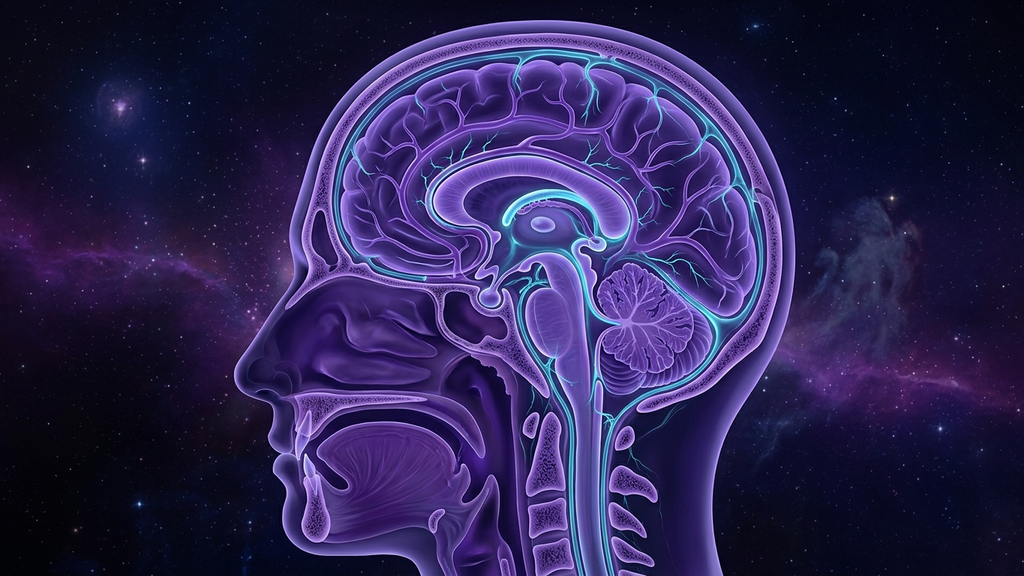
A patient describes it like a band tightening around the skull, or a hand pressing down from above, or air pressure trapped behind the eyes. It is not a headache in any classical sense — there is no throbbing, no aura, no light sensitivity. Imaging is clean. Neurological exam is clean. And yet the sensation is so persistent and so distinctive that it dominates the clinical picture. This is head pressure, and it is one of the most undertreated symptoms in dysautonomic medicine.
What Head Pressure Actually Reflects
The intracranial compartment is a tightly regulated hydraulic system. Brain tissue, blood, and cerebrospinal fluid share a fixed volume — the Monro-Kellie doctrine. Any subtle imbalance in inflow, outflow, or compartmentalization produces a sensation that the brain registers as pressure, even when frank intracranial hypertension is not present.
Three subsystems are usually involved:
- Cerebral blood flow regulation. Autonomic dysfunction disrupts the moment-to-moment matching of blood supply to neural demand. Either underperfusion (POTS, orthostatic hypotension) or overperfusion (vasomotor instability) can register as pressure.
- Venous and lymphatic drainage. Internal jugular outflow, vertebral venous plexuses, and the glymphatic system together clear the brain. Compression at the craniocervical junction, postural strain, or sluggish glymphatic flow during disrupted sleep all produce a sensation of fullness.
- Cellular bioenergetics. Astrocytes and neurons that cannot make adequate ATP cannot maintain ion gradients, water homeostasis, or capillary tone. Mitochondrial inefficiency at the tissue level produces edema-like changes at the microscopic level — and a felt sense of pressure at the macroscopic one.
The Common Phenotype
The classic head-pressure patient is a long COVID survivor, a recovering POTS patient, or a chronic stress patient with a long history of vagal underactivity. The pressure is usually worse in the morning, worse on standing, worse after cognitively demanding tasks, and worse on poor-sleep days. It often coexists with brain fog, tinnitus, and the sensation that the eyes feel "tired" or "strained."
The Workup That Matters
A practical, tiered approach:
- Rule out the dangerous: idiopathic intracranial hypertension (papilledema on fundoscopy, imaging), CSF leak (positional pattern, MRI with contrast), venous sinus thrombosis (especially in any postpartum or hypercoagulable context), and structural cervical pathology.
- Characterize the autonomic state: tilt table testing, HRV analysis, and orthostatic vitals.
- Look at the bioenergetic substrate: ferritin, B12, magnesium, vitamin D, and consider organic acids if available.
The Intervention Stack
I treat head pressure with three concurrent levers.
Improve Cerebral Perfusion
Aggressive hydration (with sodium for the dysautonomic patient), compression garments, slow postural transitions, and — where appropriate — pharmacologic support such as fludrocortisone or midodrine. The goal is to stabilize cerebral perfusion pressure on movement.
Restore Drainage
Sleep posture matters more than most patients realize: a slightly elevated head-of-bed (4–6 inches) reduces nocturnal congestion. Gentle cervical mobility work and lymphatic drainage techniques applied along the sternocleidomastoid and behind the ears can be surprisingly effective. Most importantly, deep restorative sleep is when the glymphatic system actually clears the brain — interrupted sleep is a structural reason for head pressure, not just a symptom of it.
Rebuild Cellular Energy
This is the slow lever, but it is the one that determines whether the symptom truly resolves or just becomes manageable. Mitochondrial cofactors — CoQ10, magnesium, B-complex, and L-carnitine — support the glial and vascular smooth-muscle cells that maintain intracranial homeostasis. PEMF and photobiomodulation are reasonable adjuncts for patients who tolerate them.
The Vagal Layer
The vagus nerve has direct and indirect influence on cerebrovascular regulation, partly through cholinergic modulation of cerebral arterioles and partly through brainstem integration of baroreceptor input. Restoring vagal tone — slow breathing, cold exposure, transcutaneous stimulation, and where available, focused ultrasound — improves the precision of cerebral autoregulation. Patients often report that head pressure is the first symptom to soften when vagal interventions take hold.
Practical note: If a patient says their head feels "full" or "tight" but their imaging is clean, do not dismiss it. They are reporting a real bioenergetic-hydraulic phenomenon. It is treatable — just not with the medications most physicians reach for first.
References
- Iliff JJ et al. "A paravascular pathway facilitates CSF flow through the brain parenchyma and the clearance of interstitial solutes." Science Translational Medicine, 2012;4(147):147ra111.
- Novak P. "Cerebral blood flow, heart rate, and blood pressure patterns during the tilt test in common orthostatic syndromes." Neuroscience Journal, 2016;6127340.
- Wilkerson MD et al. "Long COVID symptom clusters and autonomic dysfunction." Annals of Internal Medicine, 2023;176(6):785-793.
- Kress BT et al. "Impairment of paravascular clearance pathways in the aging brain." Annals of Neurology, 2014;76(6):845-861.