POTS, High Pulse, and Dizziness: A Bioenergetic Lens on Dysautonomia
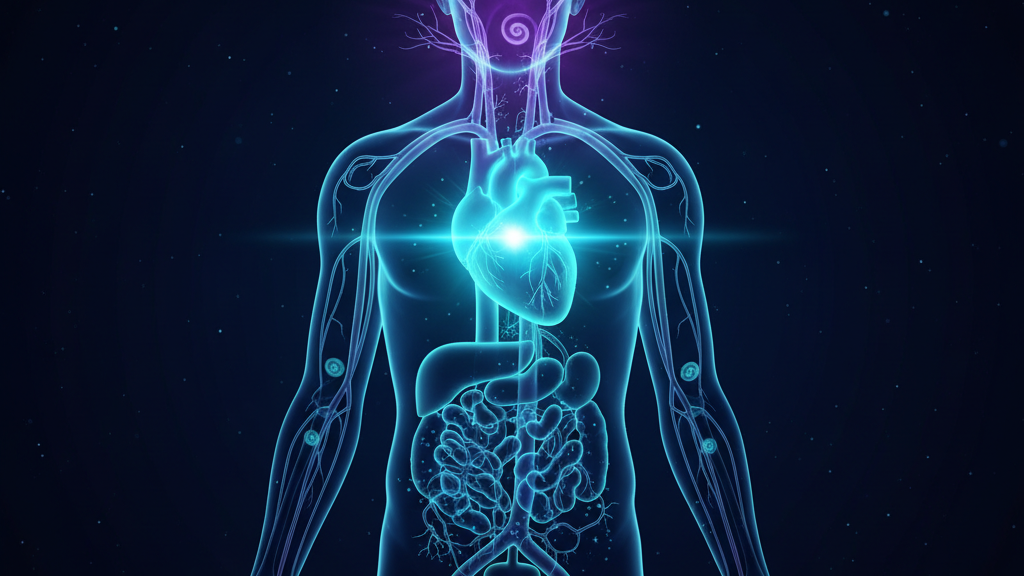
A patient stands up, her heart rate jumps from 70 to 130, she gets lightheaded, sometimes she has to sit back down. This is postural orthostatic tachycardia syndrome — POTS — and the standard explanation centers on autonomic nervous system dysregulation. That is correct, but it does not go far enough.
What POTS Really Is
The sympathetic surge on standing is the body's compensation for inadequate venous return and cerebral perfusion. The question is why the body needs such a large compensation. Increasingly, the answer involves the cellular machinery that should be supporting the cardiovascular response in the first place.
The Bioenergetic Layer
Many POTS patients show evidence of impaired mitochondrial function in skeletal muscle, reduced exercise tolerance disproportionate to deconditioning, and a metabolic profile suggestive of inefficient ATP production. The post-viral subset — long-COVID POTS — shows this particularly clearly. The autonomic dysregulation is not happening in a metabolically healthy body.
The Frequent Comorbidities
- Mast cell activation syndrome (often co-occurring with POTS)
- Hypermobile Ehlers-Danlos and connective tissue laxity
- Small fiber neuropathy
- Chronic fatigue and post-exertional malaise
- GI dysmotility
The Workup I Run
- 10-minute stand test (NASA lean test) for documentation
- Tilt-table testing if diagnosis is unclear
- Plasma catecholamines, supine and standing
- Iron studies including ferritin (low ferritin is a frequent driver)
- Thyroid panel
- Vitamin B12 and methylmalonic acid
- Tryptase if MCAS is suspected
The Intervention Stack
Cardiovascular Conditioning
The Levine protocol — graded recumbent and upright training over months — produces meaningful improvement in many patients. The mechanism is partly increased blood volume, partly increased ventricular size, partly mitochondrial adaptation in cardiac and skeletal muscle.
Volume and Electrolyte Support
Increased fluid and salt intake, compression garments, and elevation of the head of bed.
Mitochondrial Cofactor Support
CoQ10, magnesium, B-complex, alpha-lipoic acid. Targeted L-carnitine in patients with documented carnitine insufficiency.
Vagal and Autonomic Recalibration
Slow breathing, parasympathetic-biasing practices, and emerging non-invasive vagal stimulation devices including focused ultrasound.
The Ultrasound Note
Transcutaneous focused ultrasound to the cervical vagus is an active research area in dysautonomia. The mechanism is mechanotransductive — pressure waves modulate vagal afferent firing — and the autonomic effects are measurable within minutes.
Bottom line: POTS is not just an autonomic miswiring. It is often a cellular energy problem expressed through the cardiovascular system. Treat both layers simultaneously.
References
- Raj SR. "Postural tachycardia syndrome (POTS)." Circulation, 2013;127(23):2336-2342.
- Fu Q et al. "Cardiac origins of the postural orthostatic tachycardia syndrome." JACC, 2010;55(25):2858-2868.
- Stewart JM et al. "Pediatric Disorders of Orthostatic Intolerance." Pediatrics, 2018;141(1):e20171673.