Oxidative Stress: The Hidden Driver Underneath Every Chronic Disease
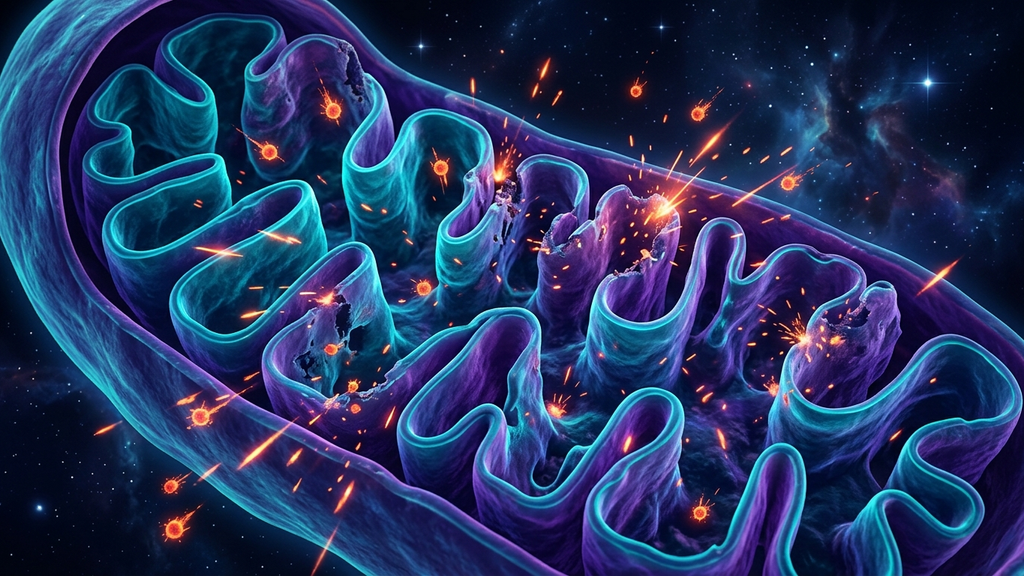
If you trace almost any chronic disease far enough upstream — cardiovascular, neurodegenerative, metabolic, autoimmune, oncologic — you arrive at the same checkpoint. Oxidative stress. The slow, cumulative damage done by reactive oxygen species (ROS) when the body's antioxidant defenses cannot keep up with production. It is the single most underappreciated driver of human disease, and the one most accessible to intervention.
What Oxidative Stress Actually Is
Every mitochondrion generates a small amount of free radical exhaust as a byproduct of making ATP. This is normal. In a well-functioning system, antioxidant enzymes — superoxide dismutase, catalase, glutathione peroxidase — neutralize this exhaust as quickly as it is produced. The system is in balance. Free radicals at low levels even have signaling functions: they participate in immune defense, redox signaling, and stem cell regulation.
The problem arises when production exceeds neutralization. Excess ROS damages proteins (impairing enzyme function), lipids (degrading membranes), and DNA (introducing mutations and accelerating aging). Critically, ROS damages the inner mitochondrial membrane itself — the very place where ATP is produced. The result is a feed-forward loop: damaged mitochondria leak more ROS, which damages more mitochondria.
What Pushes the System Over the Edge
The list is depressingly modern:
- Chronic psychological stress and sustained sympathetic activation
- Poor sleep (the brain clears oxidatively-damaged proteins during deep sleep)
- Highly processed diets low in polyphenols and antioxidant cofactors
- Environmental toxins: heavy metals, mold mycotoxins, pesticides
- Air pollution and chronic low-grade exposure to ultrafine particles
- Sedentary lifestyle (movement upregulates endogenous antioxidant systems)
- Untreated infections, post-viral states, mast cell activation
- Excess alcohol; cigarette smoke
Any one of these is manageable. The modern condition is to carry several at once, chronically.
How Oxidative Stress Presents Clinically
Patients with chronic oxidative load rarely arrive saying "I have oxidative stress." They arrive with non-specific symptoms that are easy to dismiss in isolation but cluster meaningfully:
- Persistent fatigue that does not improve with rest
- Cognitive slowing, brain fog, word-finding difficulty
- Slow wound healing and bruising
- Premature graying or thinning hair
- Poor exercise tolerance and prolonged recovery from physical effort
- Increased frequency of infections
- Skin that looks older than chronologic age would predict
What to Measure
The honest answer is that direct measurement of oxidative stress is difficult outside of a research setting. The proxies that are clinically useful: high-sensitivity CRP, ferritin (high values can reflect oxidative stress, low values reflect substrate depletion), homocysteine, GGT (a sensitive marker of liver oxidative load), and where available, 8-OHdG in urine (a direct marker of oxidative DNA damage). HRV is the best non-invasive proxy for the autonomic state that drives much of this — low HRV correlates strongly with elevated systemic oxidative load.
The Five-Lever Reset
1. Reduce Production
Address the inputs above: stress, sleep, processed food, environmental exposures. There is no antioxidant strategy that can outrun a lifestyle that is generating ROS at a pathological rate.
2. Support Endogenous Antioxidants
Glutathione is the master antioxidant. Support its synthesis with adequate protein intake, N-acetylcysteine (NAC) at 600–1200mg daily, glycine, and selenium. Sulforaphane (from cruciferous vegetables or supplemented from broccoli sprout extract) is a potent activator of the Nrf2 pathway, the master regulator of endogenous antioxidant gene expression.
3. Supply Exogenous Antioxidant Cofactors
The most reliable supplements with consistent evidence: vitamin C (food-form preferred), mixed tocopherols, CoQ10/ubiquinol, alpha-lipoic acid, and polyphenols from real food (berries, green tea, dark chocolate, herbs). Avoid mega-dosing isolated antioxidants — paradoxically, this can become pro-oxidant.
4. Rebuild Mitochondrial Membrane Integrity
Omega-3 fatty acids (EPA/DHA), phosphatidylcholine, and adequate B-vitamins (especially B2 and B3) support membrane structure and electron transport. PEMF and photobiomodulation appear to upregulate mitochondrial biogenesis through complementary mechanisms.
5. Drive Adaptive Hormesis
Brief, controlled stressors — cold exposure, heat exposure (sauna), zone-2 exercise, and short fasting windows — trigger an adaptive antioxidant response. This is hormesis. The system gets stronger when challenged in measured doses. Chronic, unrelieved stress is the opposite — it damages without giving the system time to adapt.
Where New Medicine Is Heading
Therapeutic ultrasound, PEMF, and red/near-infrared photobiomodulation are converging on the same mechanism — they all appear to act partly through controlled, transient ROS production that triggers Nrf2-mediated antioxidant upregulation. This is the same hormetic logic, delivered as a physical-medicine modality. The clinical evidence is still maturing but the mechanistic case is increasingly clean.
The bigger picture: You cannot supplement your way out of an oxidative crisis. You can, however, reduce production, support endogenous defenses, and use hormetic stressors to make the system more capable. That sequence — not just antioxidants — is what changes the clinical course.
References
- Sies H, Jones DP. "Reactive oxygen species (ROS) as pleiotropic physiological signalling agents." Nature Reviews Molecular Cell Biology, 2020;21(7):363-383.
- Picard M, McEwen BS. "Psychological Stress and Mitochondria." Psychosomatic Medicine, 2018;80(2):126-140.
- Houghton CA. "Sulforaphane: Its 'Coming of Age' as a Clinically Relevant Nutraceutical." Oxidative Medicine and Cellular Longevity, 2019;2716870.
- Calabrese EJ, Mattson MP. "How does hormesis impact biology, toxicology, and medicine?" npj Aging and Mechanisms of Disease, 2017;3:13.