Mold Illness and CIRS: When Biotoxins Strangle Mitochondrial Energy
A patient lives in a home with a roof leak that was "fixed" two years ago. Since then: progressive fatigue, brain fog, unexplained inflammation, new sensitivities to scents and chemicals, and a sense that her body has fundamentally changed. Standard labs are clean. Mental health is fine. The husband and kids are unaffected. This is the classic CIRS presentation — and roughly 24% of the population is genetically susceptible to it.
What CIRS Actually Is
Chronic Inflammatory Response Syndrome (CIRS) is a multisystem inflammatory illness triggered by biotoxins, most commonly from water-damaged buildings. The illness was characterized by Dr. Ritchie Shoemaker and is now supported by a robust biomarker framework. CIRS is not "mold allergy." It is a failure of innate immunity to clear mycotoxins, mycobacterial fragments, endotoxins, and other water-damaged-building (WDB) toxins — combined with a runaway inflammatory cascade that the body cannot shut off.
The Genetic Bottleneck
Roughly 24% of the population carries an HLA-DR/DQ haplotype that fails to mount an effective antibody response to biotoxins. In susceptible individuals, the toxins circulate, bind to receptors, and chronically activate innate immunity without ever being cleared. This is why one family member can be sick in the same home where everyone else is fine.
The Biomarker Picture
CIRS is one of the most lab-defined chronic illnesses we have, and the biomarkers tell a coherent story:
- TGF-β1 — when chronically elevated, drives loss of regulatory T cells and fuels the inflammatory loop.
- C4a — the most sensitive marker of WDB exposure; drives capillary hypoperfusion and cellular hypoxia.
- MMP-9 — elevation indicates ongoing tissue inflammation.
- VEGF — typically low; reflects impaired neovascularization and tissue oxygenation.
- ADH/osmolality split — abnormal ratio drives the unstable thirst, low blood pressure, and "I drink water and it doesn't help" pattern.
- MSH — typically low; affects sleep, mood, hormonal regulation, and gut barrier.
- VCS test (visual contrast sensitivity) — a low-cost screen with reasonable sensitivity.
The Mitochondrial Hit
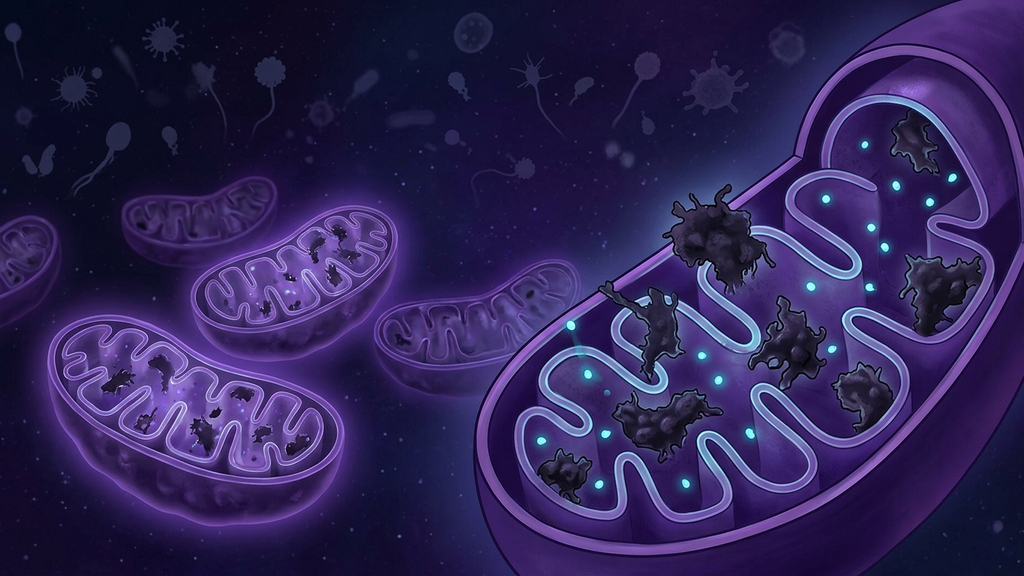
Here is the clinically important piece: C4a elevation causes capillary hypoperfusion, which produces cellular hypoxia, which damages mitochondria. The energy crisis in CIRS is not a vague "fatigue." It is a measurable consequence of poor tissue oxygen delivery and oxidative stress at the level of the electron transport chain. This is why the patients describe feeling like their cells are "starving."
The Sequenced Protocol
The Shoemaker protocol — refined and republished in 2025 — proceeds in a strict order. Steps cannot be skipped because each one corrects a biomarker that the next step depends on.
- Removal from exposure. Non-negotiable. Identify the WDB, fix it or move. ERMI testing of the environment to confirm.
- Binders. Cholestyramine or Welchol bind biotoxins in the gut and prevent enterohepatic recirculation.
- Treat MARCoNS if present (nasal swab) — multi-antibiotic-resistant coag-negative staph is a chronic biofilm reservoir in many CIRS patients.
- Address gluten antibodies — typically resolved with strict gluten avoidance during treatment.
- Correct androgens — testosterone and DHEA are often suppressed.
- Correct ADH/osmolality.
- Reduce MMP-9 — diet modifications and Actos (when appropriate).
- Address VEGF.
- Address C3a, C4a.
- Reduce TGF-β1 — often requires losartan.
- Restore MSH.
- VIP nasal spray — the final step, used only when prior biomarkers have normalized.
Where Mitochondrial Support Fits
While the Shoemaker protocol corrects the inflammatory cascade, mitochondrial recovery requires direct support: CoQ10 (ubiquinol), magnesium, B-complex, alpha-lipoic acid, and — increasingly — photobiomodulation. Patients who restore mitochondrial output recover energy more reliably than those who treat the inflammation alone.
What This Is Not
CIRS is sometimes dismissed as a label without science. The 2025 evidence base — published in Medical Research Archives — disagrees. The condition has defined biomarkers, a defined genetic susceptibility, and a defined treatment protocol with reproducible outcomes. It is, however, frequently misdiagnosed as fibromyalgia, ME/CFS, depression, or "stress."
Clinical takeaway: In a patient with multisystem symptoms, normal standard labs, and exposure history of water damage — run the CIRS panel. Removal from exposure is step zero; nothing else works until the toxin input stops. Then the biomarkers come back online in order, and the mitochondria can finally rebuild.
References
- Dorninger M et al. "The CIRS Protocol: A Sequential, Evidence-Based Treatment for Biotoxin-Associated Chronic Inflammatory Response Syndrome." Medical Research Archives, 2025;13(9).
- Shoemaker RC, House DE. "Sick building syndrome (SBS) and exposure to water-damaged buildings: time series study, clinical trial, and mechanisms." Neurotoxicology and Teratology, 2006;28(5):573-588.
- Hooper DG et al. "Mycotoxin detection in human samples from patients exposed to environmental molds." International Journal of Molecular Sciences, 2009;10(4):1465-1475.
- Brewer JH et al. "Detection of mycotoxins in patients with chronic fatigue syndrome." Toxins, 2013;5(4):605-617.
- Ryan JC et al. "Transcriptomic signatures of CIRS-WDB." Frontiers in Immunology, 2015;6:317.