Dizziness and Lightheadedness: The Cerebral Blood Flow Problem No One Examines
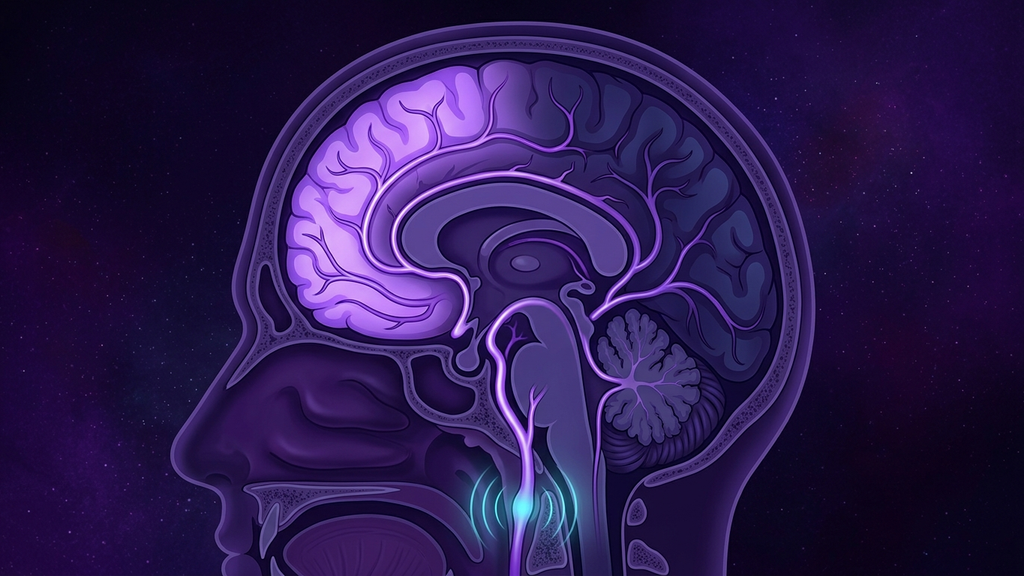
When a patient says "I get dizzy when I stand up," I do not start with the vestibular system. I start with cerebral blood flow. The most common — and most missed — cause of chronic dizziness is not BPPV, not vestibular migraine, and not anxiety. It is autonomic dysregulation that produces transient cerebral hypoperfusion every time the patient changes posture, eats a meal, or pushes through a long day.
The Mechanism in Plain Terms
When you stand up, gravity pulls roughly 500 ml of blood into the lower body within seconds. Baroreceptors detect the drop in central pressure, sympathetic outflow constricts peripheral vessels, and heart rate rises. The net effect is preserved cerebral perfusion. When any link in this chain fails — slow baroreflex, weak venous tone, low blood volume, or impaired cerebral autoregulation — the brain briefly under-perfuses. The patient feels dizzy, foggy, and sometimes faint.
The 2025 Evidence on Cerebral Hypoperfusion
Recent imaging studies have confirmed what experienced autonomic clinicians have suspected for years: orthostatic intolerance is fundamentally a cerebral blood flow disorder. Transcranial Doppler studies in POTS patients show reduced cerebral perfusion, impaired autoregulation, and oscillatory cerebral blood flow that correlates directly with cognitive dysfunction and dizziness. Importantly, some patients exhibit early cerebral hypoperfusion without tachycardia — the dizziness is real even when the heart rate looks normal.
The Connective Tissue Angle
In hypermobile patients, the picture deepens. Loose connective tissue produces venous distensibility, increased pooling on standing, and — increasingly recognized — altered cerebral vessel compliance. A 2024 imaging study found reduced regional cerebral blood flow in hEDS patients that tracked with dizziness severity. This is one reason the EDS-POTS-MCAS triad presents with so much chronic lightheadedness.
The Workup I Actually Use
- 10-minute active stand test with BP and HR every minute — far more informative than a clinic sit-to-stand.
- Salt and fluid intake history — most patients are undersalting and undervolumed.
- Ferritin, B12, and morning cortisol — common contributors to low circulating volume and weak baroreflex.
- HRV trend — chronic suppression points to systemic autonomic dysregulation.
- Vestibular screen — only after the autonomic workup is clean, since vestibular and autonomic dysfunction can coexist and feed each other.
The Treatment Stack
Restore circulating volume
- 2.5–3 L water daily.
- 8–10 g sodium daily (yes, this much, in the absence of contraindication).
- Electrolyte solutions in the morning before standing.
Improve venous return
- Medical-grade compression (20–30 mmHg waist-high) — most underused intervention in this population.
- Calf-strengthening — the "muscle pump" is a real and trainable cardiovascular component.
- Recumbent or seated exercise to build conditioning without orthostatic stress.
Modulate the autonomic state
- Slow breathing protocols increase parasympathetic tone and baroreflex sensitivity.
- Transcutaneous auricular vagus nerve stimulation is being studied in orthostatic intolerance and shows early signal for improved cerebral autoregulation.
- In selected patients: midodrine, ivabradine, or low-dose beta-blockade — but these are downstream tools that work better once volume and conditioning are addressed.
What "Persistent Postural-Perceptual Dizziness" Often Really Is
PPPD is a real diagnosis, but it is often used as a label when the autonomic workup was never done. A 2025 differential-diagnosis paper makes the point clearly: orthostatic dizziness and PPPD have overlapping presentations, and missing the autonomic component leads to years of unhelpful vestibular rehab.
Clinical takeaway: Chronic dizziness is usually a circulation problem masquerading as a vestibular problem. Find the cerebral hypoperfusion, restore volume, train the venous return, and modulate the autonomic state. The room stops spinning when the brain stops briefly losing its blood supply.
References
- Stewart JM et al. "Cerebral blood flow in orthostatic intolerance." Journal of the American Heart Association, 2024;13(20):e036752.
- Liu W et al. "Differential diagnosis of orthostatic dizziness with persistent postural-perceptual dizziness." Frontiers in Neurology, 2025;16:1642869.
- van Campen CLMC et al. "Cerebral blood flow reduction in ME/CFS and orthostatic intolerance." Clinical Neurophysiology Practice, 2020;5:50-58.
- Wallman D et al. "Autonomic dysfunction in patients with orthostatic dizziness." Annals of Clinical Neurophysiology, 2023;25(1):27-34.
- Mar PL, Raj SR. "Postural orthostatic tachycardia syndrome: mechanisms and new therapies." Annual Review of Medicine, 2020;71:235-248.