Burnout at the Cellular Level: A Mitochondrial Recovery Protocol
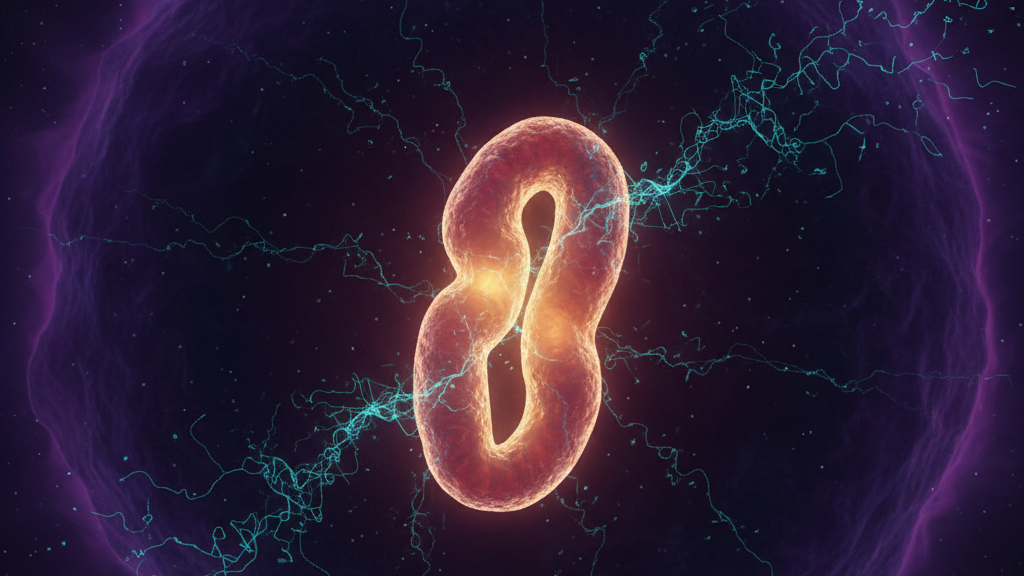
Patients describe burnout as "running on empty." That phrase is more biologically precise than they realize. When the demand for cellular energy chronically exceeds supply, the mitochondria — the literal energy plants of every cell — begin to throttle output, prune themselves through mitophagy, and eventually fall behind on basic maintenance. What we call burnout is the felt sense of that deficit.
Why Willpower Cannot Fix a Bioenergetic Crisis
The HPA axis (hypothalamic-pituitary-adrenal) is not the prime mover here. Cortisol is downstream. Upstream is the mismatch between ATP demand — driven by sustained sympathetic activation, immune signaling, and cognitive load — and ATP supply, which depends on intact electron transport chain function. In a clinical workup, persistently elevated lactate-to-pyruvate ratios, low intracellular magnesium, and reduced heart rate variability tell the same story: oxidative phosphorylation is impaired.
The Three Layers of Burnout Recovery
I treat burnout as a three-layer problem, addressed in this order:
1. Reduce Demand
Until the energy ledger balances, no intervention sticks. This means temporary load-shedding: shorter workdays, simplified decision-making, a true off-switch on devices in the evening. The autonomic nervous system needs to receive an unambiguous safety signal.
2. Restore Vagal Tone
The vagus nerve gates parasympathetic recovery. Slow nasal breathing at roughly six breaths per minute, cold-water face immersion, and — increasingly in our clinic — non-invasive ultrasound vagal stimulation can shift the autonomic state within minutes. This is not a relaxation technique. It is a direct neuromodulatory intervention with measurable effects on HRV.
3. Rebuild Mitochondrial Capacity
Once demand is down and parasympathetic tone is up, the cells can begin to rebuild. Strategies with the strongest evidence: zone-2 cardiovascular work (when tolerated), short fasting windows that activate mitophagy, sleep prioritization for nightly mitochondrial repair, and targeted cofactors — CoQ10, magnesium glycinate, NAD+ precursors, and B-complex.
Where the New-Medicine Tools Fit
Focused ultrasound neuromodulation, applied to the cervical vagus or to deeper autonomic nuclei, is becoming a viable addition to this protocol. The mechanism is mechanotransductive — pressure waves modulate ion channel kinetics in target neurons — and the effect is rapid downshifting of sympathetic drive. We are also seeing reasonable signal from photobiomodulation and PEMF in supporting mitochondrial recovery, though the evidence base is younger.
What Recovery Actually Looks Like
Patients want a timeline. Honest answer: cellular recovery from sustained burnout is measured in months, not weeks. The first marker of progress is usually sleep architecture normalizing. Then morning cortisol begins to rise on its own. HRV climbs. The exhaustion lifts last, and lifts unevenly.
Clinical takeaway: Burnout responds to bioenergetic intervention, not exhortation. If the mitochondria cannot make ATP, no mindset shift will compensate. Treat the cell, restore the autonomic state, and the rest follows.
References
- Picard M, McEwen BS. "Psychological Stress and Mitochondria." Psychosomatic Medicine, 2018;80(2):126-140.
- Manoogian ENC, Panda S. "Circadian rhythms, time-restricted feeding, and healthy aging." Ageing Research Reviews, 2017;39:59-67.
- Frangos E et al. "Non-invasive Access to the Vagus Nerve Central Projections via Auricular Stimulation." Brain Stimulation, 2015;8(3):624-636.
- Tyler WJ et al. "Ultrasonic modulation of neural activity." Neuroscientist, 2018;24(5):437-449.