Bioelectronic Medicine: The Drug-Free Therapy That Is Already Here
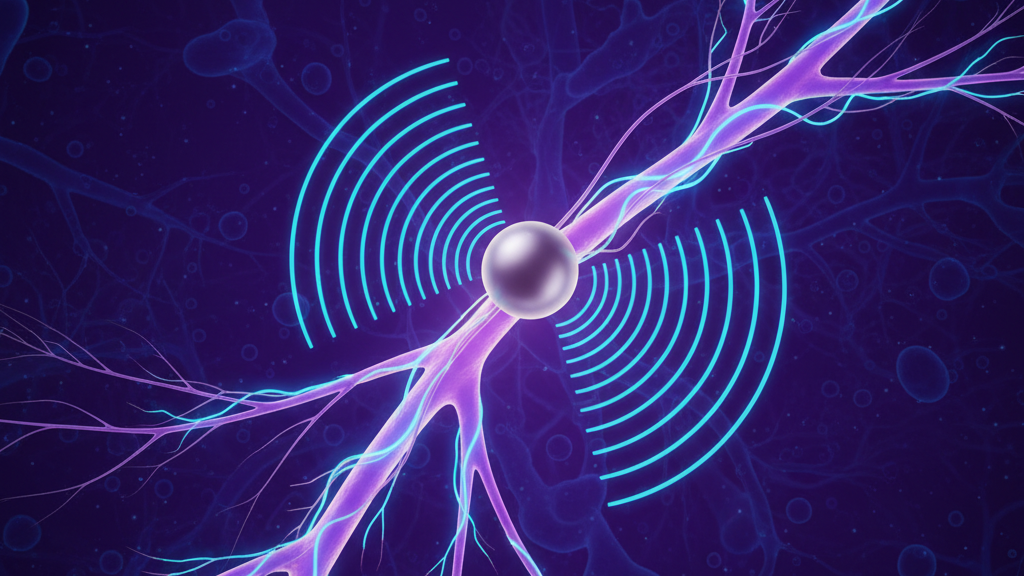
Bioelectronic medicine is the deliberate, targeted modulation of nervous system activity using electrical, magnetic, or ultrasonic signals — typically without pharmaceuticals. The category is broad, the evidence base is rapidly maturing, and several applications are already FDA-cleared.
What the Field Includes
Implanted Neuromodulators
Vagus nerve stimulators for refractory epilepsy and treatment-resistant depression. Sacral neuromodulation for overactive bladder and fecal incontinence. Spinal cord stimulators for chronic pain. Deep brain stimulators for Parkinson's, essential tremor, and refractory OCD.
Non-Invasive Devices
Transcutaneous vagus nerve stimulators (auricular and cervical) for migraine and depression. Transcranial magnetic stimulation for depression and OCD. Single-pulse TMS for migraine. Transcutaneous electrical nerve stimulation for various pain conditions.
Focused Ultrasound
This is the rapidly emerging frontier. Low-intensity focused ultrasound can modulate neural activity in deep brain structures with millimeter precision, non-invasively. Applications under active investigation include depression, anxiety, addiction, essential tremor, and chronic pain.
Photobiomodulation
Targeted application of red and near-infrared light to support mitochondrial function. Evidence in wound healing, joint pain, and emerging applications in cognitive function.
Why This Matters Clinically
Pharmaceuticals act systemically. Bioelectronic interventions act locally and reversibly. For patients who do not tolerate medications, who have failed multiple medications, or whose pathology is circuit-specific rather than diffusely chemical, bioelectronic options open doors that drugs cannot.
The Mechanism Question
Different bioelectronic modalities have different mechanisms:
- Electrical stimulation directly depolarizes neuronal membranes and triggers action potentials.
- Magnetic stimulation induces secondary electrical currents in neural tissue.
- Ultrasound modulates neuronal activity through mechanotransductive effects on ion channels — particularly mechanosensitive channels like TRP family and Piezo proteins.
- Light modulates cytochrome c oxidase activity in mitochondria, supporting cellular energy production.
Where the Cell-Consciousness Lens Fits
If you take seriously the idea that cellular state — including the energetic and informational state of cells — is fundamental to health, then bioelectronic interventions are particularly interesting. They modulate the state of the cell directly. They do not introduce a new molecule; they alter how the existing cellular machinery operates. This is a different kind of medicine, and it is well-suited to conditions in which the dysfunction is regulatory rather than structural.
What to Watch For
- Closed-loop devices that adapt stimulation in real time based on physiological feedback
- Wearable focused ultrasound for autonomic modulation
- Combined modality protocols pairing ultrasound with photobiomodulation
- Personalized neuromodulation guided by individual functional imaging
The frame: Bioelectronic medicine is not the future. It is here. The question for the next decade is which patients benefit most, and how to integrate these tools with conventional care.
References
- Olofsson PS, Tracey KJ. "Bioelectronic medicine: technology targeting molecular mechanisms for therapy." Journal of Internal Medicine, 2017;282(1):3-4.
- Tyler WJ et al. "Ultrasonic modulation of neural activity." The Neuroscientist, 2018;24(5):437-449.
- Famm K et al. "A jump-start for electroceuticals." Nature, 2013;496(7444):159-161.